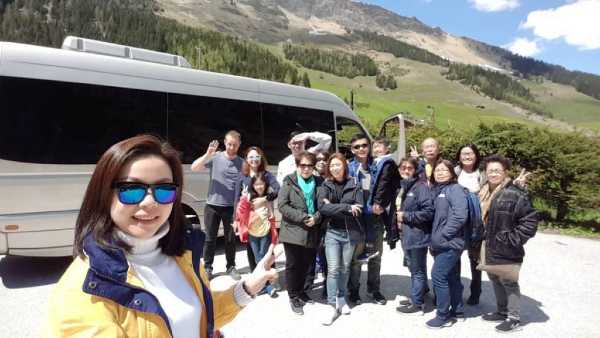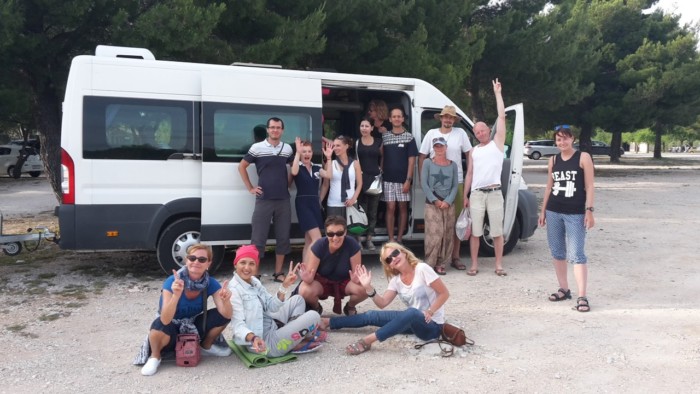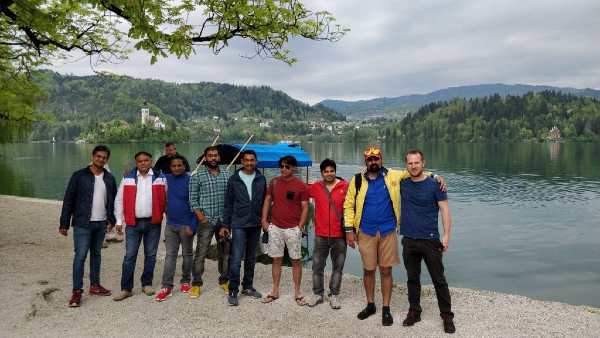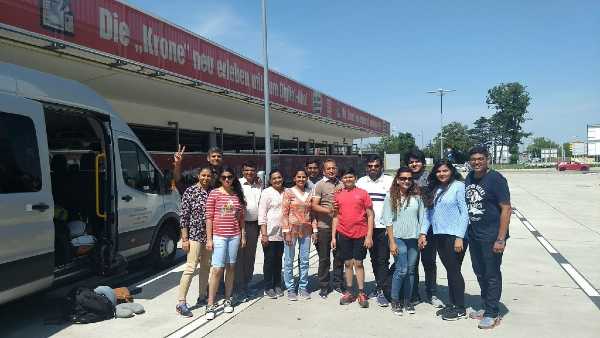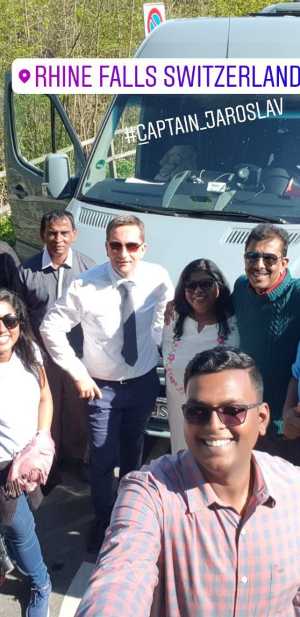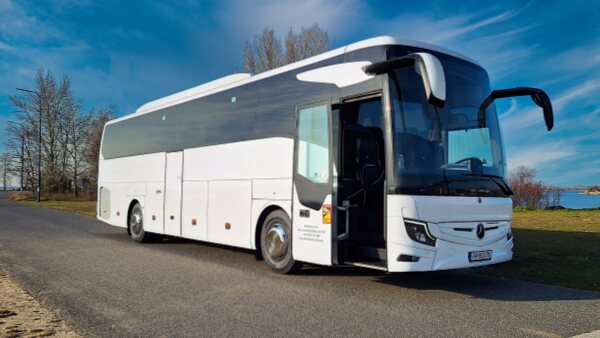
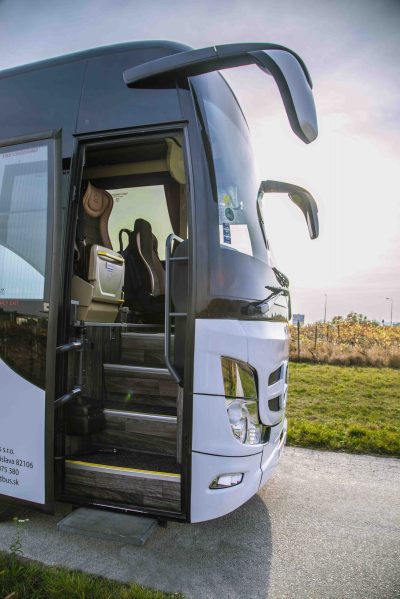
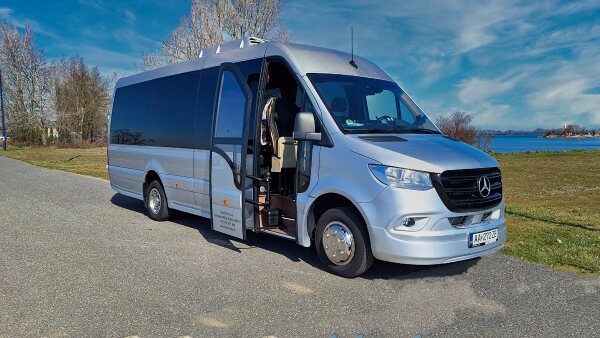
Enjoy the ultimate freedom to travel where you want and when you want it, by selecting one of our modern reliable touring buses with an experienced English speaking tour driver, including the top of the range premium Mercedes Benz Sprinter minibuses and coaches at your disposal for the whole of your trip.
All we do is tours. Serving up to 150 groups per year, we are purely focused to provide best touring experience.
The quality of our services recognised by our clients consistently providing us with great reviews.
We are not agents or brokers. We provide you vehicles that we own and look after, so we can guarantee you the quality of the service.
We have only experienced and friendly English speaking tour drivers who will give you support through the whole tour.
No hidden costs – just clear, upfront pricing with all potential extras explained in advance
You can pay comfortably and securely with all major cards without having to worry about transaction charges.
We offer a versatile fleet of vehicles, passenger vans, minibuses, and full size coaches, designed to accommodate groups of various sizes. Whether you’re organizing a small group tour or planning a multi-day adventure, our bus charter services provide the perfect solution for your travel needs.
Passenger vans:Â
For smaller groups of up to 6 – 13 people, our 16-seater touring passenger minivans are the ideal choice. These vehicles provide lot of space for both passengers and luggage, ensuring a stress-free travel experience.
Minibuses:Â
Groups of 7 to 18 passengers will enjoy using our Mercedes Sprinter minibuses, which blend comfort and practicality. These vehicles are perfect for small group tours. While Sprinters can occasionally accommodate up to 20 passengers, we recommend this only for short trips or when luggage is minimal to ensure comfort.
Coaches:
For larger groups, our Mercedes Tourismo coaches offer unmatched comfort and space. Designed to transport up to 50 passengers with their luggage, these vehicles are ideal for multiday day tours.
Need Help Choosing the Right Vehicle?
If you’re uncertain about the best option for your group’s size and needs, check out our detailed Guide to European Bus Rental Vehicles or contact our team directly.Â
Compact passenger vans seating up to 7 passengers Â
Getting started with your bus rental is easy! Simply send us an email or fill out the form here. You don’t need to have a fully detailed itinerary at this stage, but providing the following information will help us give you an accurate cost estimate for your bus hire:
This information allows us to tailor our service to your needs and ensure you have a smooth and enjoyable experience with our bus charter service.
If you need an inspiration to create your itinerary, have a look at some of our suggested tours. These tours can be customised any way you need to design the European tour that you dream about. If you are still unsure of any of this, contact us as we are happy to help. Being a tour specialist, we use our extensive experience to suggest you the most effective route and what places are not to be missed along the way. We also know how many days you will need to cover all your sights stress free.
Once we receive sufficient information about your plans, we will prepare a detailed price quotation for you. Our quotes include the cost of the bus rental, driver services, driver meals, and miscellaneous parking charges.
For the driver’s accommodation, we prefer that it be booked by the client along with the group. However, if the hotel cannot provide a free or discounted driver’s room, or if the group’s hotels are too centrally located without night parking, we will arrange accommodations for the driver.
Please note that city bus permits and driver tips are not included in the quote and will need to be arranged or covered separately. This transparent approach ensures you have a clear understanding of the costs and can enjoy your tour with no unexpected surprises.
In the case you will accept our offer, we will start preparing for your arrival. We will give you continuous support in planning and fine-tuning your itinerary until the beginning of your tour. Some of the arrangements such as booking hotels for your group should be done before your arrival. Booking restaurants and sightseeing tickets can be done at a later stage.
Some of our clients come with thorough day to day planned itineraries but some choose to have more basic approach with just a general list of sights they want to see. Your driver will support you in any case to make the most of your holiday. He will make sure that you did not miss on any interesting sights and you are on time for your prebooked sightseeing or restaurants.
For the rest of the tour, you have a great flexibility. You can use your hired bus with a driver for all intercity transportation, en route sightseeing, city tours and day tours. Going shopping and going to restaurants is also included.
Unfortunately, all holidays have to come to an end. But by this time you will have a bag full of memories. We will be happy to welcome you back as one tour is never enough to experience the diversity of all countries in Europe.
A journey is best measured in friends, rather than miles.” – Tim Cahill
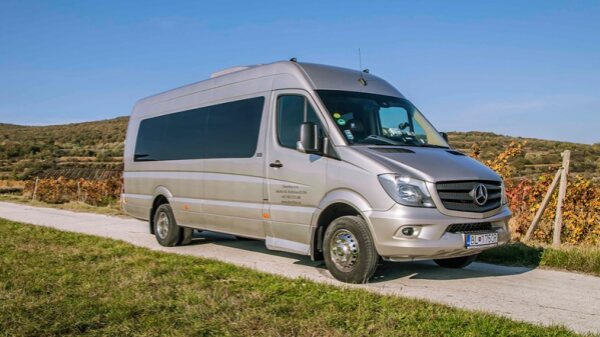
We recommend our 8 seater touring passenger minivans for groups up to 6 persons. This is to ensure sufficient travel and luggage space. Groups of 7 plus persons can choose one of our ultimate touring minibuses, Mercedes Sprinter.
Mercedes Sprinters are recommended for groups up to 7 – 17 persons large. In specific cases, they can accommodate groups up to 20 persons but space for passengers would be limited. A trailer would also be necessary to accommodate the luggage.
We recommend one of our Mercedes Tourismo midsize coaches, if the passenger and luggage space is the priority. These can accommodate up to 50 passengers with their luggage comfortably.
The cost of the hire of bus with a driver is influenced by many variables. It depends on the season of the year, where the tour starts/ends, empty run kilometres and road tolls. In some European cities, entry fees for buses are applicable. Therefore, we calculate the cost for each tour individually to give you the most accurate price. To give you an idea, the cost of renting a tourist Mercedes Sprinter minibus with a driver typically ranges from €550 to €800 per day. For larger groups, a 50+ seater coach generally costs between €800 and €1,100 per day. Please note that prices usually do not include tips or parking fees. Get in touch with us to get a quote.Â
For tours starting in peak season, we recommend booking the bus at least 3 – 4 months in advance to ensure availability. The busiest months are April to July. In less busy period, booking 2 month in advance is usually fine.
We do not provide bus hire for self drive. To operate a vehicle with more than 9 seats in Europe is fairly complicated. You would need EU transport operator licence. Drivers are required to have a bus D licence, tachograph card and professional drivers training valid in EU.
Moreover, driving large passenger vehicles in Europe is difficult. It takes an experienced, professional driver to navigate through all the traffic rules, parking and access restrictions which are different to almost each city. When you use our minibus and bus rental in Europe, you will not have to worry about any of this and just enjoy your tour.
We operate under EU licence and you can rent our buses with a driver anywhere in the EU including Switzerland. Below are the most common locations of our floating fleet.
Where to Go Next from Vienna: A Multiday Bus Rental Tour
Vienna is not only a magnificent destination on its own but also the perfect starting point for exploring Central Europe’s most beautiful cities. With a bus rental in Vienna, your group can travel comfortably and conveniently to nearby capitals. Here’s an itinerary to inspire your next stops:
Prague:
The City of a Hundred SpiresJust a few hours’ drive from Vienna, Prague captivates visitors with its stunning architecture, charming squares, and the iconic Charles Bridge. Wander through the historic streets, visit Prague Castle, and don’t miss the famous Astronomical Clock in Old Town Square. While buses can’t navigate the medieval city center, a rental bus in Prague can drop your group off near key locations, such as Čech Bridge, for convenient access. The journey covers about 340 km and takes approximately 4.5 hours. For a more scenic route, consider passing through the picturesque Wachau Valley and the fairy-tale town of Český Krumlov.
Budapest
Head east to Budapest, where the grandeur of Buda Castle and the vibrant life of Pest await. Take a stroll along the Danube, admire the Parliament building, and relax in the city’s famous thermal baths. With a bus rental in Budapest, your group can easily visit landmarks such as Fisherman’s Bastion, Heroes’ Square, and Gellért Hill, making your trip hassle-free. Distance 240 km, Travel time 3 hours. Consider visiting Bratislava, Gyor or Pandorf Outlet on the way.
Salzburg:Â
Travel west to Salzburg, the charming birthplace of Mozart and the backdrop of The Sound of Music. Visit the stunning Hohensalzburg Fortress, Mirabell Gardens, and the historic Old Town, a UNESCO World Heritage Site. With a bus rental in Salzburg, you can enjoy the scenic Alpine landscapes and make the most of your time in this delightful city. Distance 300 km, travel time 4 hours. If you have time, you can take a scenic route through Wachau Valley, visit Melk, Linz or Hallstatt.
Ljubljana:
South of Vienna, Ljubljana is a hidden gem with its quaint cobblestone streets, colorful riverside architecture, and picturesque Ljubljana Castle. Known for its sustainability and vibrant atmosphere, this city offers a unique charm. A bus rental in Ljubljana provides the perfect way to explore not just the city but also nearby attractions like Lake Bled. Distance 380 km, travel time 5 hours. Visit Graz for a convenient break.
Plan Your Multiday Bus Charter Tour
With bus rental services in Vienna and each destination, your group can seamlessly travel through Central Europe, enjoying comfortable transfers and personalized itineraries. This tour ensures you experience the history, culture, and beauty of each city while traveling in style and convenience.
Vienna is one of those places that gets under your skin before you even get off the bus. Elegant, but not imposing. Magnificent, but with a human dimension. And even if you have a plan, you can change a lot of things on the spot – because Vienna is about experiences, not about checking off lists.
Vienna – the capital of spies?
Vienna – a metropolis that has earned its name not only thanks to its music, history and cafĂ© charm, but also as one of the capitals of espionage in Europe. No, it is not just a legendary clichĂ© from movies.
After World War II, Vienna was an ideal place for meetings of secret services from all over the world due to its neutrality, geographical location and large number of international organizations. According to several articles in prestigious media such as The Guardian, Financial Times or Wall Street Journal, hundreds of foreign agents still operate here under diplomatic cover. But this does not mean that visitors should be afraid – quite the contrary. Vienna is one of the safest cities in the world. And at the same time, it is full of stories. Whether you let yourself be carried away by the history of the Habsburgs, the art of Gustav Klimt, or just sit quietly in a cafĂ© with a Sachertorte – you will take away more than just a souvenir from Vienna.
Basic information about Vienna
If you are planning a trip to the Austrian capital, these basic facts will help you get your bearings
before you even get off the plane. Vienna is a modern European capital that combines history with the convenience of modern travel.
Where is Vienna located?
Vienna is the capital of Austria and lies in the heart of Europe – literally at the crossroads between
West and East. It is located in the northeastern part of the country, just a few kilometers from
the borders with Slovakia, Hungary and the Czech Republic. From Schwechat Airport, it is approximately a 20-25 minute drive to the city center.
What language is spoken in Vienna?
The official language in Austria is German, or more precisely the Austrian German variant. Good news for tourists: in the city center, in hotels, restaurants and at most tourist sites
you will also be able to communicate in English without any problems. In some locations you will also find information materials in Italian, French or Russian.
Currency used in Austria
Austria is a member of the eurozone, so the valid currency is the euro (€). Payment cards (Visa,
Mastercard, Maestro) are accepted almost everywhere, from restaurants to taxis.
However, we recommend carrying a small amount of cash with you – some smaller shops, markets or food stalls may prefer to pay in cash.
Time zone and approximate time
Vienna is located in the Central European Time Zone (CET), i.e. UTC +1. During
summer time (March – October) it shifts to daylight saving time (CEST), i.e. UTC +2. If you are flying in
from overseas or from another continent, don’t forget to set your watch – or better yet,
use the time difference to enjoy a pleasant evening with a Viennese coffee.
Useful contacts for travelers
It is wise to have important phone numbers handy, especially when traveling to a foreign city. Here is a quick overview:
â—Ź Emergency number (police, fire department, ambulance): 112 (also works from a mobile phone)
â—Ź Tourist Information Center (Wien Info): +43 1 24555
● Vienna Airport – information: +43 1 7007 22233
â—Ź Austrian Railways (Ă–BB): +43 5 1717
Most hotels and better accommodations will also be happy to provide you with city maps, transportation tips, and recommended routes.
How to get around Vienna
Getting from point A to point B in Vienna is easy, fast and in most cases
comfortable. The Austrian metropolis has one of the most reliable public transport systems in Europe,a well-thought-out system of cycle paths and pleasant pedestrian zones.
Public transport and metro
Vienna has an excellent public transport system, managed by the Wiener Linien company.
It includes the metro (U-Bahn), trams, buses and trains.The metro (U-Bahn) has 5 main lines (U1 – U6, excluding U5) and runs at short intervals – every 3–5 minutes during the day. Trams and buses also cover parts outside the centre and operate reliably even in the evening.
Tickets are valid for all types of transport and can be purchased at ticket machines, online or via the Wiener Linien app. We recommend 24/48/72-hour tickets or the Vienna City Card, which also includes discounts to museums.
Bicycles and walking
Vienna is an ideal city for lovers of walking and cycling. The pedestrian zone in the center (around Stephansdom, Graben, Kärntner StraĂźe) is well-maintained, safe and full of shops and cafes. Vienna’s bike-sharing (Citybike Wien, currently
switching to new systems) offers the opportunity to rent a bike at stations throughout
the city.
There are many cycle paths in the city, especially along the Danube and in parks. When riding, pay attention to the rules
– for example, bicycles are often prohibited in pedestrian zones.
Taxi, Uber and alternatives
Taxi services in Vienna are reliable, but relatively expensive. The price depends on time and
distance, the fare is approximately 4–5 €.
Uber works in Vienna and is often cheaper than regular taxis. There are also apps
like Bolt, Free Now or Ă–BB Shuttle.
If you are traveling in a group or with luggage, it may be more cost-effective to book a minivan
or rent a car with a driver (more below).
Boat transport – does it exist in Vienna?
Yes, but it is more of a tourist attraction than a practical means of transport.
The Twin City Liner connects Vienna with Bratislava on the Danube – it is a speedboat with a view and a bar, suitable for a day trip.There are also sightseeing boats on the Danube that offer short cruises with audio commentary and a glass of wine. Great for relaxing in the summer!
Tip: Why is it worth traveling by minibus with a driver?
If you are traveling as a group of friends, family or tourist group, the most convenient way to get around Vienna and its surroundings is to rent a minibus or bus with a driver.
â—Ź You don’t have to deal with transfers, tickets or time restrictions.
â—Ź a charter bus will comfortably take you from your hotel to the sights, on trips outside Vienna or back to the airport.
â—Ź The driver knows the best routes and will adapt to your program.
● Moreover, if you plan to visit several places in a day (e.g. Schönbrunn, Prater, Wachau), you will save time and energy.
DirectBus offers bus rental in Vienna with professional drivers and the possibility of creating a route according to your own wishes.
When is the best time to visit Vienna?
Vienna is beautiful all year round – and that is not a phrase. Each season has its own charm, so
it is worth choosing a date according to what you expect from a trip.
Spring in Vienna (March – May)
The city comes alive, parks and gardens bloom, the weather is pleasantly fresh. A great time for
walks and exploring culture without the onslaught of summer tourists. Recommended for lovers of photography and a peaceful atmosphere.
Summer Vienna (June – August)
Festivals, open-air concerts, lively streets and long evenings with wine. The weather is usually warm (25–30 °C) and recently even extreme. Ideal for active tourists and groups who
want to experience Vienna in the peak season..
Vienna’s Autumn Atmosphere (September – November)
A leisurely pace, fewer crowds and golden parks – that’s autumn in Vienna. A great time to visit museums, cafes and cultural events. Accommodation prices tend to be more affordable.
A trip to Vienna in winter (December – February)
If you’re looking for a fairy-tale atmosphere, the Christmas markets and streets lit up with lights will enchant you. Temperatures drop below freezing, but romance and a cup of hot punch make up for it. Winter is also ideal for trips to nearby ski resorts.
So when is the best time to visit Vienna?
â—Ź Best atmosphere: December (Christmas markets) or May (flowering gardens)
â—Ź Best time for sightseeing: April – June and September – October
â—Ź Fewest tourists and best prices: November and February
Vienna will win you over at any time of year – just choose the experience you are looking for.
Vienna Airport (Schwechat) – Everything You Need to Know
Vienna International Airport (VIE) is the gateway to Austria for millions of
travellers each year. Located just 18 kilometres from the city centre, in a south-easterly direction, it is one of the most user-friendly airports in Europe thanks to its compactness and efficiency.
How to find your way around the airport
The terminals are well signposted, the languages spoken are German and English, and orientation is easy even for inexperienced travellers. Most flights arrive via Terminals 1
or 3. Getting in and out of the airport is quick, especially if you are only travelling with hand luggage.
How to get from the airport to the city
Transportation into the city is fast and reliable. The fastest option is the City Airport Train
(CAT), which takes you to Wien Mitte station in around 16 minutes. A cheaper alternative is the regional S-Bahn train, which is slower but affordable. The airport is also connected to a bus network, and you can also call a taxi, Uber or Bolt, which offer a convenient but more expensive transfer into the city. Airport parking If you are driving to the airport, you have a choice of several parking lots – from short-term parking directly at the terminal to long-term options with a shuttle service. Early online booking can ensure you a better price and better accessibility. Convenient transfer for groups For larger groups, families or travelers with multiple suitcases, renting a minibus with a driver is often the most convenient option. You will avoid transfers, waiting or carrying luggage through train stations. A driver will pick you up at the airport, help you load the car, and take you to your hotel or your next destination – whether it’s the center of Vienna, Bratislava, or a trip to the surrounding vineyards. Services like DirectBus offer modern, air-conditioned vehicles, professional drivers, and the ability to create a customized itinerary.
Prices and costs of living in Vienna
Vienna is one of the more expensive European destinations, but if you know where and how to look, you can travel here sensibly. In this chapter you will find approximate prices.
Accommodation in Vienna
Accommodation prices depend on the location and season. In the center (around Stephansdom, Innere Stadt) expect higher prices – a double room in a hotel costs from 170-400 € per night. Outside the center, but still within easy reach, you can find quality hotels for 90-170 €. Hostels and apartments also offer cheaper options from 35-90 € per night.
Food and dining in Vienna
Lunch in a mid-priced restaurant will cost you around 15-25 € per person, dinner in a mid-range restaurant from 30 €. Coffee and dessert in a classic Viennese café cost around 8-10 €. Street sausage stands are affordable at €7-12 per portion.
The most famous attractions in Vienna
Vienna is a city where history, culture and elegance meet on every corner. You can
walk in the footsteps of emperors, admire world-class works of art or enjoy relaxation in the vast parks. Choosing the “best” is difficult, but here is a selection of what you definitely
should not miss:
Historical and architectural gems of Vienna
Schönbrunn
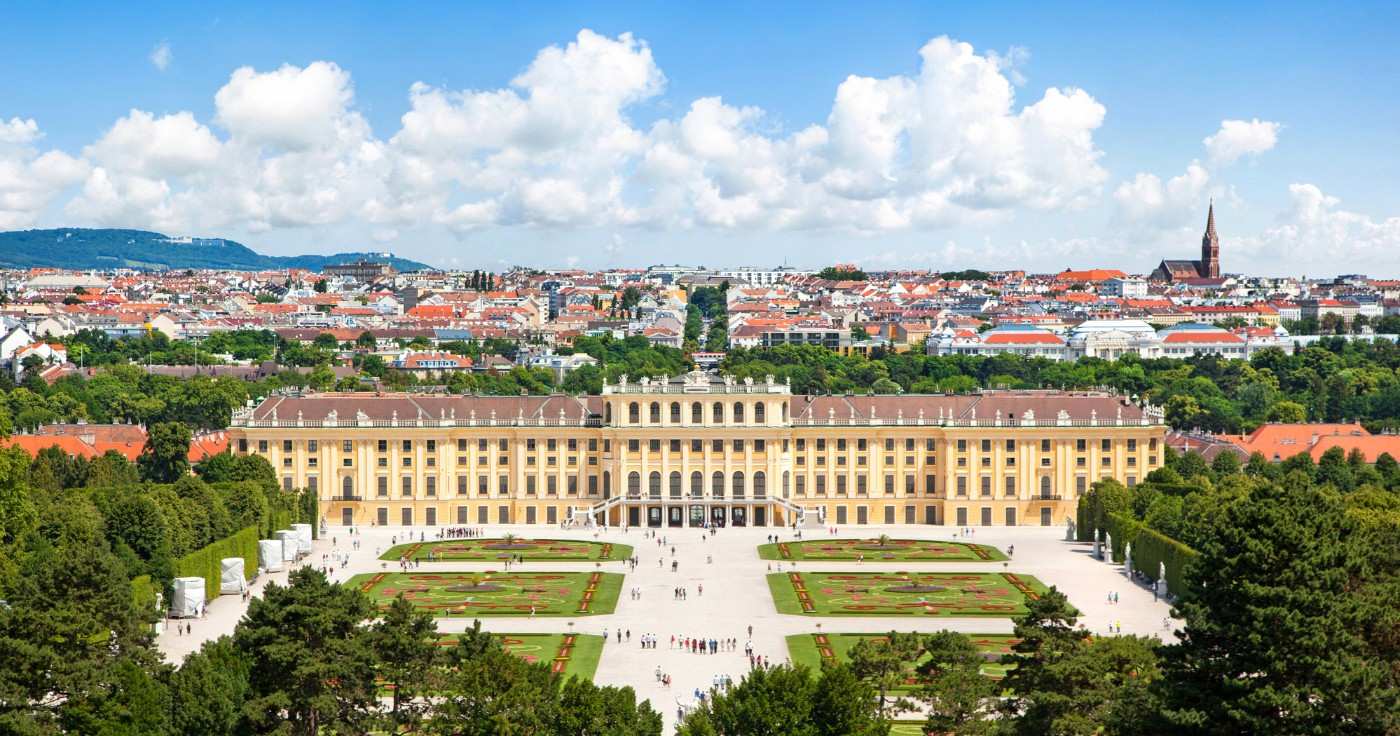
The Baroque castle with extensive gardens was the summer residence of the Habsburgs. In addition to the luxurious interiors, you will also find the oldest zoo in the world and wonderful views from the Gloriette. Ideal for a day trip.
Stephansdom (St. Stephen’s Cathedral)
Stephansdom is the symbol of Vienna with its colorful roof and Gothic spirit. It is
right in the center and is open to the public – we recommend climbing the tower for a view of
the old city.
Belvedere
An elegant palace complex with beautiful gardens and a rich collection of art – including
the famous painting “The Kiss” by Gustav Klimt. A great combination of culture and romance.
Vienna State Opera (Staatsoper)
A legendary world stage, known not only for its excellent program, but also for its beautiful
architecture. Even if you don’t go to a performance, it is worth visiting at least as part of a
Tour.
Museums and culture in Vienna
Kunsthistorisches Museum
One of the best museums of fine arts in Europe. Here you will find works by Brueghel,
Rubens, Rembrandt and Egyptian treasures. The building itself is a work of art.
Sisi Museum and Hofburg
An exhibition dedicated to Empress Elisabeth (Sisi) reveals the behind-the-scenes of the imperial court. A visit to the former residences in the Hofburg is also included.
Albertina
If you like graphics and drawings, definitely don’t miss the Albertina – a gallery with works from DaVinci, Picasso to Warhol.
Nature and relaxation in Vienna
Prater
A vast city park with the famous Ferris wheel and many attractions for children and
adults. A great place to relax or have fun – even all day long.
Danube Island (Donauinsel)
A popular place for Viennese people to do sports, barbecue or sunbathe. In summer, the Donauinselfest music festival is also held here.
Something special – Hundertwasserhaus
A colorful house with irregular lines that looks like something out of a fairy tale. It is not accessible from the inside(private apartments), but a photo from the outside is almost a must.
Wachau Valley (for a trip outside Vienna)
The Danube Valley with vineyards, castles and fairy-tale towns – ideal for a day trip, especially in combination with wine tasting.
Tip for organized travelers: If you only have 1–2 days, we recommend creating an itinerary
based on the type of experience you want (culture, nature, romance). With a guide or your own chartered bus you will get to everything faster and more comfortably – especially if you are traveling in a group.
Things to do in Vienna by type of traveler
Vienna is not just a “city for adults” or an open-air gallery. It is a vibrant, welcoming and diverse place that offers something for everyone – from couples in love to families to nightlife seekers.
Things to do in Vienna as a couple
Vienna is one of the most romantic cities in Europe – and without the clichĂ©s. Quiet gardens, elegant cafes, evening concerts and movie-like views.
Tips for couples visiting Vienna:
â—Ź A sunset cruise on the Danube
â—Ź A candlelit dinner in the Spittelberg district or at the Naschmarkt
● A view from the Stephansdom tower or the Gloriette in Schönbrunn
â—Ź A visit to Belvedere Palace and Klimt’s “The Kiss”
â—Ź Wine tasting in the vineyards above the city (e.g. Grinzing)
Vienna with children – tips for families
Vienna is surprisingly friendly and well-equipped for families with children. Playgrounds, interactive museums and amusement parks are easily accessible and often within walking distance of the
center.
Family attractions in Vienna:
● Schönbrunn Zoo – one of the oldest and best in Europe
â—Ź Technical Museum with interactive exhibits
â—Ź Prater – amusement park, children’s carousels, Madame Tussauds wax museum
â—Ź Haus des Meeres (aquarium and tropical house in a former anti-aircraft tower)
â—Ź Schönbrunn Children’s Museum – where children can transform into princes and princesses
Vienna nightlife and activities for young people
If you’re looking for fun after dark, Vienna won’t disappoint – but it’s good to know where to look.
The city offers sophisticated bars, underground clubs and open-air concerts.
Nightlife in Vienna:
● Grelle Forelle – a club for electronic music lovers
● Flex – an alternative for indie/rock/electro fans
● Bermudadreieck (Bermuda Triangle) – a zone of bars and pubs in the center
â—Ź Open-air summer cinema (e.g. Rathausplatz Film Festival)
● Beach bars by the Danube – great in summer
Free Vienna – experiences without admission
Even without a big budget, you can enjoy many beautiful moments in Vienna. The city is open,
green and full of accessible experiences for everyone.
What is free in Vienna:
â—Ź Visiting the city parks (Volksgarten, Stadtpark, Augarten)
â—Ź Entrance to the Stephansdom Cathedral (main nave)
â—Ź Free museums on special days or exhibitions
â—Ź Summer concerts in public spaces (e.g. in front of the opera)
â—Ź Galleries and art spaces with free admission (e.g. MuseumsQuartier exterior)
Vienna in winter and trips to the surrounding area
Winter in Vienna has an inimitable charm. The city is covered in lights, every square smells of punch and roasted chestnuts, and if you’re lucky, snow will cover the towers like from a fairy tale.
But winter in Vienna is not only about Christmas markets. It is also a great time to relax in a thermal spa, an active day on the slopes or quietly explore historical sites without the crowds.
Christmas markets: when Vienna lights up
From mid-November until Christmas Day, the whole city turns into a living Christmas postcard. You can find them in almost every major square, but some are worth an extra visit.
Top Christmas markets in Vienna:
● Rathausplatz – the largest and most famous market with iconic lighting, carousels and an ice rink.
● Spittelberg – a cozy, artisan market in the narrow streets of the historic quarter.
● Belvedere – romantic markets in front of the illuminated castle.
● Medieval market by the Michaelerkirche church – authentic atmosphere and original
gifts.
What to look forward to at the Christmas markets? Hot apricot punch, handmade decorations,
the smell of cinnamon and the most beautiful light backdrops.
Trips to the surroundings of Vienna: spas, mountains, fairy-tale towns
Vienna has the advantage that in less than an hour’s drive you can reach places where you can
relax wonderfully – whether in a bath with hot mineral water or with a view of a snowy slope.
Thermal spas and relaxation around Vienna
Baden bei Wien
An elegant spa town with a 19th century atmosphere. In addition to the spa, you will also find a casino, a beautiful park and historic cafes.
Bad Blumau
A unique thermal spa designed by architect Hundertwasser. Salt water, pools with an open fire, silence and a design that is also healing to the eye.
Skiing and fun in the snow
Yes, you can also go for a day’s skiing from Vienna. These resorts are suitable for families,
beginners and leisurely riders.
Zauberberg Semmering
A modern resort with night skiing and a toboggan run.
Stuhleck
The largest ski area near Vienna, also suitable for larger groups.
Annaberg, Hochkar, BĂĽrgeralpe Smaller resorts with a pleasant atmosphere, short lines for the lifts and beautiful views.
Picturesque towns and nature
Winter is not just about skiing – even a simple walk along the snow-covered streets can be an
Experience.
Mariazell
Spiritual center and magical town with Christmas atmosphere, basilica and hot chocolatein traditional cafes.
Ötschergräben (in winter with guide)
Deep gorges and wild nature – a slightly different but exceptional experience for lovers of silence.
Schneeberg and Puchberg
Snow-covered nature, views and winter hikes with beautiful panoramas.
Shopping and souvenirs from Vienna
From traditional gifts to modern design – shopping in Vienna is a pleasant experience
in itself.
Typical Austrian souvenirs
Mozartkugeln – iconic chocolate pralines filled with marzipan
Sacher cake – you can buy the original cake in a gift box directly from the hotel
Sacher
Wine from the Wachau region – mainly Grüner Veltliner and Riesling
Austrian folk textiles – napkins, aprons, quality tablecloths and linen
Christmas decorations – hand-painted glass balls from specialist shops
Designer accessories – inspired by Hundertwasser or Klimt (bags, diaries, jewellery)
Best places to shop
Mariahilfer Straße – main shopping street with everything from H&M to boutiques
Kärntner Straße and Graben – more upmarket brands, historic atmosphere
Naschmarkt – food, spice and local produce market
Freytag and Berndt – a bookshop and map paradise for travel lovers
Weihnachtsdörfer (in December) – markets full of artisanal and original gifts
Austrian cuisine – what to taste
Austrian cuisine is hearty, honest and often surprisingly diverse. Vienna, as the capital,
offers the best of imperial tradition, rural heritage and modern urban style.
Main dishes
One of the absolute classics is Wiener Schnitzel – a thin, golden veal cutlet, served with
potato salad. Tafelspitz, stewed beef in a broth with apple horseradish, which was one of Emperor Franz Joseph’s favorite dishes, also offers an exceptional experience. And if you’re craving something quick, try Käsekrainer – a juicy sausage filled with cheese, which you can find
at most street stalls.
Sweet specialties
Among sweet desserts, Sachertorte – a chocolate cake with apricot jam is clearly the dominant one. Apfelstrudel, an apple strudel with cinnamon and raisins, or Kaiserschmarrn – a fluffy, torn pancake served with jam is also popular.
Where to enjoy good food in Vienna?
You can taste traditional cuisine, for example, in restaurants such as Figlmüller (known for its huge schnitzels) or Plachutta (recommended for Tafelspitz). For coffee and dessert, head to historic cafes such as Café Central. You can experience the authentic atmosphere of Austrian wine bars in the Grinzing district, where wine is served with local specialties.
Traveler tip: If you have limited time, we recommend at least a quick lunch at a sausage stand, a cake at a classic café, and dinner at one of the wine bars – that way you will experience Vienna on a plate and in a glass.
Transport in Vienna
A single public transport ticket costs €2.40, but time tickets are more affordable – for example, a 24-hour ticket costs €8. If you plan to visit more attractions, the Vienna City Card is worth it, which includes public transport and discounts to museums and monuments and costs from €17.
Practical tips for traveling to Vienna
Some things happen repeatedly on the road – a poorly packed suitcase, a missing adapter, panic when a card or mobile phone is lost. That is why here you will find some practical advice that can save you a lot of trouble (and money) when visiting Vienna.
What to pack?
Vienna has four seasons, and each one can surprise you – autumn and spring in particular can be unpredictable.
â—Ź In spring and autumn: light jacket, comfortable shoes, umbrella
â—Ź In summer: sunglasses, sunscreen, water bottle
â—Ź In winter: warm jacket, scarf, gloves and layers – it is usually well heated inside
Tip: Don’t forget an adapter for type F sockets (EU standard) if you are coming to Vienna from outside the EU.
Payments and finances in Vienna
In Vienna you can usually pay by card (Visa, Mastercard, Maestro), but some smaller businesses -especially Christmas markets, stalls and market halls – prefer cash. We recommend having at least 20-40 € in cash. ATMs are widely available, but avoid “Euronet”
machines due to high fees
Mobile payments such as Apple Pay or Google Pay work without problems in most shops.
Where to stay in Vienna?
Choosing where to stay in Vienna depends largely on what you want to experience during your stay. Each district has its own character and advantages – just choose according to your travel style.
Center (Innere Stadt – 1st district)
If you want to live in the heart of the action, a few steps from the Stephansdom, the opera, and historic cafes, this location is ideal for you. Accommodation is more expensive here, but the atmosphere, accessibility to monuments, and romantic evening walks make up for it. A great choice for first-time visitors, couples, and culture enthusiasts.
Leopoldstadt (2nd district)
This district on the Danube is quieter, offering families and groups a wider selection of apartments and hotels at more affordable prices. The popular Prater park and lots of greenery are within walking distance. You can get to the center by metro in a few minutes.
Neubau and Mariahilf (7th and 6th districts)
This is creative and stylish Vienna – full of designer shops, galleries, cafes and life.
Accommodation here is often chosen by younger travelers and those who want to discover a “different” Vienna outside of the classic guidebooks. The MuseumsQuartier and the largest shopping street, Mariahilfer StraĂźe, are nearby.
Schönbrunn and the surrounding area (13th and 14th districts)
For those who prefer a quieter environment and more space, accommodation near Schönbrunn Palace may be a good choice. The surroundings are quiet, green and very pleasant for morning walks. You can get to the center by metro in about 15–20 minutes.Â
If you are traveling with a group or family, apartments with a kitchenette can also be advantageous. However, for a short weekend stay, a hotel in a wider center is worth it – you will save time and energy on transfers.
How many days to spend in Vienna?
Vienna is a city that doesn’t make you rush. You can experience its atmosphere even in one day,
but if you want to understand what makes it special, it’s worth staying at least two or three nights.
1-day trip: Vienna “for a taste”
If you only have one day in Vienna – for example, when transferring or traveling from Bratislava –
we recommend focusing on the center and the top attractions that are close to each other.
 Recommended program for a 1-day trip in Vienna:
2–3 days: The best of Vienna at a leisurely pace
This is the ideal time to combine history, art, and relaxation.
 Suggested itinerary for a 2-3 day trip in Vienna:
Day 1:
Day 2:
Day 3 (if you have):
A week’s stay: Vienna like a local
If you stay longer, you have the space to slow down, enjoy the culture and take a few trips to the surrounding area.
 What else you can do in Vienna if you have enough time:
Advantages of traveling with DirectBus
When you are planning a trip to Vienna or Central Europe, stress-free security and flexibility
mean a lot. These are exactly the advantages offered by the DirectBus service – minibus or bus rental with a driver. Professional vehicles and experienced drivers DirectBus operates its own fleet of modern vehicles, from seven-seater vans to minibuses and full-fledged buses for up to 50 people. All vehicles are kept in top condition. and equipped with air conditioning, comfortable seats and sufficient space for luggage and
equipment.
Experienced drivers speak English, know the route and local traffic regulations, so you can rely on their professionalism throughout the journey.
Price transparency without hidden fees
With DirectBus you can see in advance what you are paying for. The price includes the car rental, driver services, fuel consumption and fees – without additional or hidden items on the final bill.
Card payment is easily available – safe and convenient.
Flexibility in creating an itinerary
Do you want to see Schönbrunn, then visit the markets in Bratislava or go for a morning in Wachau? DirectBus allows you to plan your route individually the way you want. The drivers support your flexibility, they do not tie you to a fixed schedule – you have control over what will happen every day.
Comfort without the stress of public transport or transfers
If you are traveling in a larger group, with children, backpacks or sports equipment, transfers and luggage accumulation can be unpleasant. Renting a minibus means direct transportation with your driver – from your hotel to the excursion destination and back. You will save time and worries that you do not have to take care of yourself.
The ideal choice for groups and longer routes
For families, groups and corporate trips, renting is a more reliable option than waiting for public transport, driving or dealing with complicated transfers. Vehicles are also available for multi-day trips, transfers between cities and comfortable transportation.
Representative service for every group event
Whether it is a trip, a conference or a weekend with friends – DirectBus will ensure you comfortable travel with a professional approach. The vehicles are equipped with wifi, air conditioning, modern seats and lighting. Drivers can recommend good restaurants, views or a good time to visit attractions according to your preferences.
Safety and rules
Vienna is a very safe city – it regularly ranks high in quality of life rankings
However, basic rules apply:
â—Ź Watch out for pickpockets on public transport and around major tourist attractions
● There are cycle paths everywhere – don’t walk on them carelessly
â—Ź Austria has zero tolerance for drugs, including marijuana
â—Ź Alcohol in public is allowed, but behavior under the influence (especially at night)
is dealt with very strictly by the police
Download an offline map (e.g. via Maps.me or Google Maps) or the Wiener Linien app for orientation on public transport.
Frequently Asked Questions
We have collected the most frequently asked questions that people are really interested in and here you will find the answers
briefly and clearly.
Where is Vienna located?
Vienna is located in Central Europe, in the northeastern part of Austria, just a few kilometers from the borders with Slovakia, the Czech Republic and Hungary. It is about 60 km from Bratislava.
What language is spoken in Vienna?
The official language is German. However, you can also speak English without any problems in the city center, hotels and tourist locations.
Is Vienna an expensive city?
Vienna is one of the more expensive European cities, especially when it comes to accommodation and restaurants in the center. However, it is also possible to travel here sensibly – there are many free attractions and cheap public transport tickets.
Is Vienna safe?
Yes, Vienna is considered one of the safest cities in Europe – even for solo
travelers. However, it is advisable to be careful of pickpockets in busy areas.
How many days do I need to visit Vienna?
One day is enough to get to know the city quickly. However, 2–3 days are ideal, during which you can see the main attractions and relax a bit. It is also worth planning trips to the surrounding area for a week.
What to do in Vienna?
Top activities include visiting Schönbrunn, Stephansdom, Prater, Vienna Opera or Belvedere. You can also visit museums, cafes, wine bars or enjoy walks through the historic center.
Where is the best place to stay in Vienna?
The most recommended neighborhoods are: the center (Innere Stadt) for comfort and sights, Leopoldstadt for families and peace, Neubau for stylish travelers and the area around Schönbrunn for relaxation and greenery.
When are the Christmas markets in Vienna?
Most markets start in mid-November and last until December 24. The most famous ones are on the Town Hall Square, near Belvedere Palace and in the Spittelberg district.
What is the best way to get around Vienna?
The city has an excellent public transport network – the metro, trams and buses are reliable and affordable.Day tickets or the Vienna City Card are good value. The centre is also ideal for
Walking.
Is it possible to make a day trip from Vienna?
Yes, trips to Wachau, Bratislava, the thermal baths in Baden
or Schneeberg are very popular. The easiest way is to rent a minibus with a driver – you will save time and transfers.
Vienna is a city that is not only worth visiting – it is really worth experiencing. Whether you are attracted by imperial castles, the smell of coffee in historic cafes, Christmas markets, cultural experiences or nature trips, Vienna has something to offer in every season.
We hope this guide has helped you find your way and inspired you to plan.
Now it’s up to you how you put together your trip – according to what makes you happy.
Get inspired, discover and plan a relaxing trip to Vienna – exactly according to your
ideas. And if you want to travel without worries, with confidence and comfort, we are here for you at DirectBus.
Narcisova 48
Bratislava
Slovakia
Business ID: 47031662
Monday to Friday 09:00 – 17:00 CET
On the road emergency: 24/7
Telephone: +421902075380
Email: info@directbustravel.com